
WASHINGTON COUNTY HISTORICAL SOCIETY (Washington County, Utah)
WASHINGTON COTTON FACTORY
Washington, Utah
LOCATION
385 W. Telegraph RoadWashington, UT 84780-1523
On Mill Creek near the old Highway 91 (then State Route 212; then Telegraph Road)
37° 7' 45" North Latitude, 113° 30' 53" West Longitude
HISTORY
Brigham Young, sensing there would be a disruption in the cotton markets resulting from the U.S. Civil War, sent people down to southern Utah to a Cotton Mission. They started experimenting with raising cotton in Utah's "Dixie".The first extensive manufacture of cotton cloth was begun in 1865 when a cooperative cotton factory was organized under the direction of Brigham Young. This meant the cotton lint would not need to be baled and sent to others to produce cloth. Appleton M. Harmon was selected to supervise the building of a mill and the installation of the necessary machinery. The Washington site was selected because of nearby water power from the Virgin River.
The building of the mill was started in 1866 and the first story was occupied in 1867. Local farmers began growing more cotton. The building was raised to two and one half stories in the fall of 1870. At that time, it was the largest factory west of the Mississippi. New equipment was shipped in from Missouri that permitted wool as well as cotton to be made into cloth.
It was always known as the Cotton Factory, not the Cotton Mill, since Snow's Gristmill, built in 1866, was located about 2-300 yards south of the Factory and was known as the Mill.
For a short while the cotton industry flourished, partly due to the Civil War and its interference with growers in the southern U.S. A manufacturing company was organized in 1871 with capital stock of $100,000. Other Mormon communities that were growing cotton and sending it to the Washington factory were Toquerville and Santa Clara.
The end of the Civil War resulted in a softening of the cotton market which made it difficult for the Washington factory to compete. So the factory never was much of a money maker but it did much to hold the pioneers here in "Dixie." It gave them work and an income which they could not get in any other way. It also supplied cloth that reduced the amount of work required in the home to produce clothing.
In April 1890 the Washington Cotton Factory was leased by Thomas Judd for five years. Under his management the mill employed 70-80 people and operated at a profit forthe first time in the history of the mill. To keep the factory producing, wool as well as cotton was woven into cloth. Silk was also tried but most of the cloth made from silk was spun and woven at home. A. Karl Larson writes of the importance of the cotton factory to the economy of Utah's Dixie in the following manner: "The importance of the Factory to the people of Dixie during the time of the Judd lease would indeed be hard to overestimate. At a time when the total money supply was scarcely sufficient to pay taxes, the Factory stood 'like the shadow of a great rock in a weary land,' helping the people to meet their needs. It gave employment to quite a large number; it took the produce of the farm and the herd in exchange for the goods it produced; its manager, David H. Morris, sent many tons of cotton batting to Z.C.M.I, at Salt Lake City and received in exchange for this commodity store goods which were traded to the people for the general products of the area without the use of specie. The Factory issued, as it had done in the past, its due bills, and these, with tithing scrip, the scrip issued by Woolley, Lund and Judd, and the scrip of the Cannaan Cooperative Stock Company, served and circulated freely as money. The advertisement of the Rio Virgin Mills, as the Factory was now referred to, in the Southern Utah Star for July 20,1895, states that the mills 'have on hand a general stock of Blankets, Flannels, Linseys, Woolen and Cotton shirts and underwear, Table cloth, Towels, Towelling, Ginghams, Cotton shirting, etc., which they will exchange for Wool, Cotton, Flour, Wheat, Barley, Oats, Pork, Butter, Cheese, and The General Products of the Country. Giving the Highest Market Price.'" The depression of the 1890's served the interests of the local cotton industry well. However, the return of prosperity in the late 1890's found the factory unable to compete with the cheaper and more attractive goods produced outside of Utah, and as business declined, Judd was forced to cancel his lease.
The factory closed in 1904 and the machinery was removed in 1910. It deteriorated until part of the roof fell in.
Starting in September of 1935, it served as a temporary CCC camp.
Put on the National Register of Historic Places (#1971000864) on April 16, 1971.
Walter Clever of Washington bought the factory with the intent of refurbishing it.
The long process of restoring the cotton factory and returning it to community use began in 1985 when Norma Cannizzaro adopted the old factory as her personal crusade. She purchased the building and invested a considerable sum in repairing the exterior and renovating the interior as an events center. After nearly a decade of pursuing the factory's preservation, however, Norma Cannizzaro could no longer support the project.
Hyrum and Gail Smith stepped up in 1993 to carry the project forward. They purchased the factory with hopes of creating a historical village around it. This plan, however, encountered difficulties and the Smiths were forced to put the factory up for sale.
In 1998, Star Nursery picked up the torch when it purchased the cotton factory to house its second St. George area store. Star nursery carefully adapted the main floor of the building to house its garden shop while preserving the cotton factory's pioneer era construction. The exterior and upper floors of the factory remain unchanged. A community-minded organization, Star Nursery makes the second floor available for public use and tours. This area also contains many artifacts associated with the history of the cotton factory.
Star Nursery remains as the owner of the Washington Cotton Factory.
Commentary by Mary Phoenix:
Perhaps the outstanding monument to Brigham Young's dream of self sufficiency is the Cotton Mill. He had learned early that the climate in southern Utah was favorable to the culture of cotton. He had sent converts familiar with this work to southern Utah with explicit instructions to grow this plant. In spite of the alkali soil they had succeeded. The cotton had been sent east but the program was being abandoned. Because the Civil War was at hand he decided that something must be done to keep the people in the south raising cotton instead of the easier vegetables that found a ready market in the mining towns of nearby southern Nevada.
His solution was to found a factory where the people could find a market for their crops, secure employment, and produce the many articles which must be secured from the East. He was determined to make the Cotton Mission, as he called Washington County, succeed. This he felt would bring more people in, cause those who were dissatisfied to remain and stop the flow of ready cash to the outside.
It did succeed as far as Brigham Young's plans were concerned, but business-wise, it was a failure. During the Civil War and immediately after, it had a limited success. It provided the people with many small luxuries and some necessities they previously had to do without. Its scrip served as a clearing house for the county.
The site was chosen because of the availability of water. The first floor contained material for the manufacture of various articles made from cotton. It was financed from public subscription and a generous loan from Young himself. The second floor, which was added later, was principally financed by a loan from Young. It took notice of the growing sheep industry by providing machines for the manufacture of woolen articles.
There was never large acreage of land suitable for the cultivation of cotton and it was expensive to grow. The oil and different articles necessary for the plant to run had to be imported and the mail was uncertain. They had to be paid for in cash which citizens of early Dixie did not have. All of these, as well as the railroad crossing the continent, played a part in its eventual closing in 1907.
A number of enterprises opened and closed in its walls and then it stood empty and forlorn until Norma Cannizzaro saw it and fell under its spell. She purchased the building in 1985 and has lovingly restored it. It is now a center of all that is good in Washington City.
PHOTOS

WCHS-02392 People in front of the Washington Cotton Factory
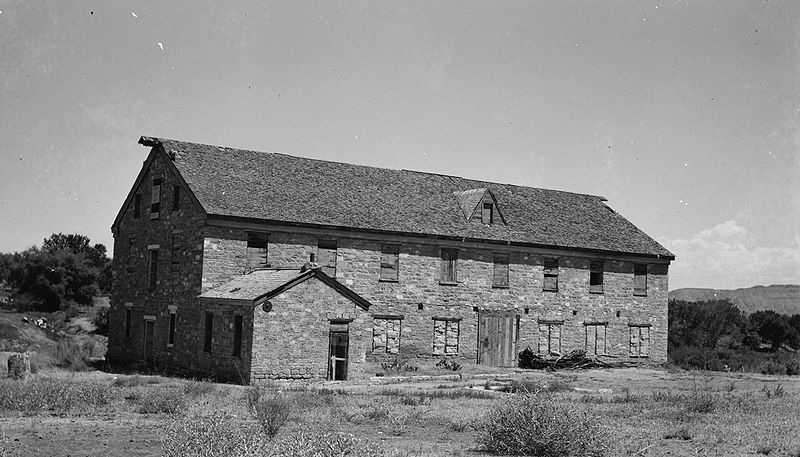
1940 photo by Delos H. Smith
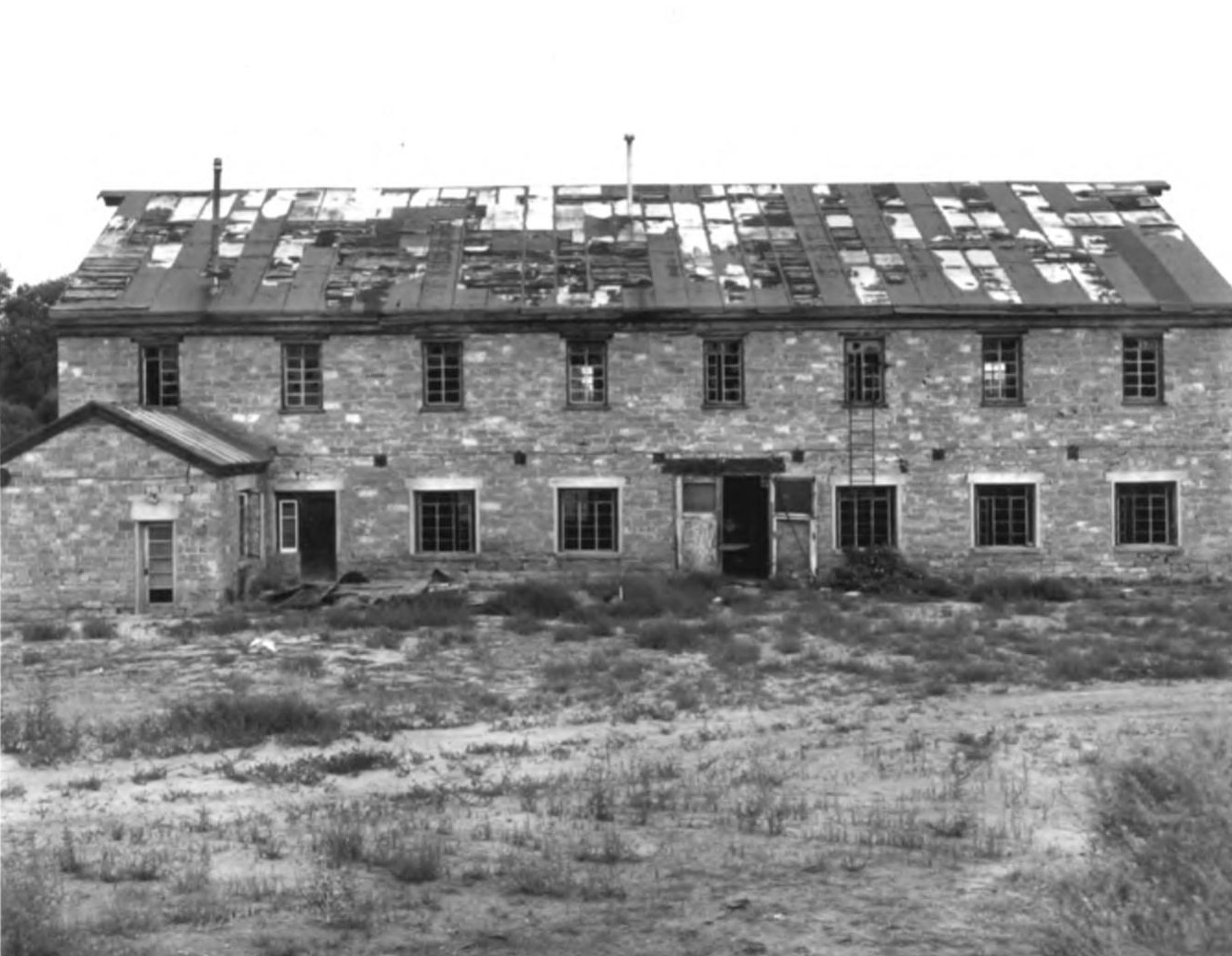 West side of the building |
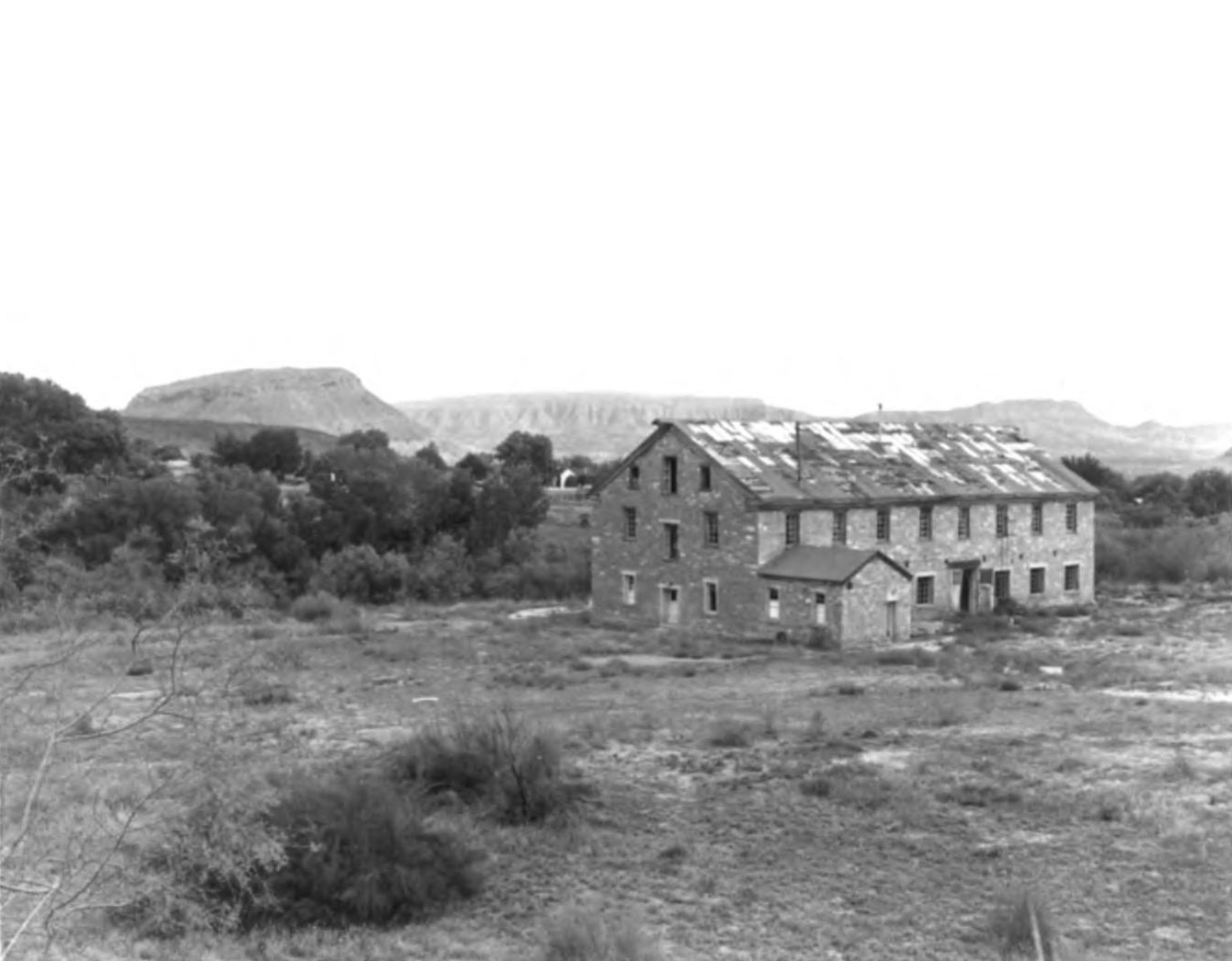 North and west sides of the building |
WCHS photos:
WCHS-00546 Jon Bowcutt sketch of the Old Cotton Mill in Washington
WCHS-00571 Gregory L. Abbott painting of the Old Cotton Mill in Washington
WCHS-00710 9th annual Pioneer Courthouse Invitational Art Exhibit poster
WCHS-01853 Photo of the old Washington Cotton Factory
WCHS-03465 Photo of the Washington Cotton Factory in 1981
WCHS-03466 Photo of the Washington Cotton Factory in 1981
WCHS-03467 Photo of the inside of the Washington Cotton Factory in 1981
WCHS-03468 Photo of the north end of the Washington Cotton Factory in 1981
WCHS-03595 Watercolor painting of the Washington Cotton Factory before restoration
WCHS-03596 Watercolor painting of the Washington Cotton Factory before restoration
WCHS-03597 Watercolor painting of the Washington Cotton Factory after restoration
WCHS-03598 Watercolor painting of the Washington Cotton Factory
Other photos on the web:
Old photo of people and a wagon in front of the Cotton Factory
Photo of the Washington CCC Camp on the grounds of the Cotton Factory
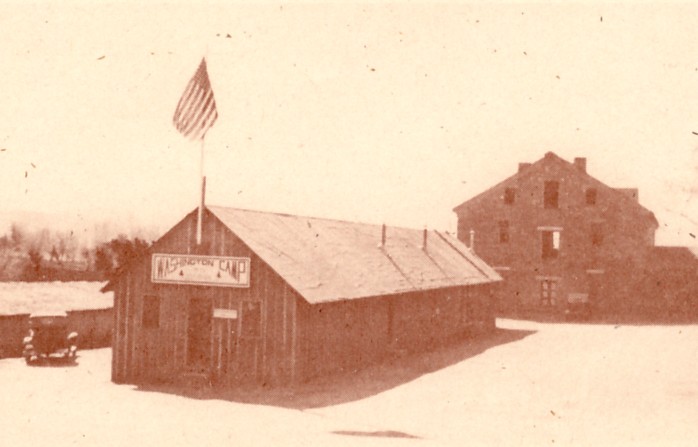
1940 photo of the north and east sides of the Washington Cotton Factory
1940 photo of the north and west sides of the Washington Cotton Factory
August 1968 photo of the north and west sides of the Washington Cotton Factory
August 1968 photo of the west side of the Washington Cotton Factory
August 1968 photo of the north side of the Washington Cotton Factory
August 1968 photo of the south side of the Washington Cotton Factory
Modern photo of the Old Cotton Factory, now the Star Nursery
Modern photo of some of the old furniture still remaining in the Cotton Factory building
Photos from the National Register of Historic Places nomination form
Also see the undigitized photos in the Mark A. Pendleton Photograph Collection.
REFERENCES
Historical Buildings of Washington County (Volume 1), pp. 14-15.National Register of Historic Places, Inventory - Nomination Form
Library of Congress, Historic American Buildings Survey, Washington Cotton Factory
Call Number: HABS UTAH,27-WASH,3-
Survey number HABS UT-1
The Washington Cotton Factory Legacy: A Sense of Mission
by Melvin T. Smith, February 23-24, 1983
Utah Heritage Award presented to the Washington County Cotton Factory on October 15, 1999.
B. Young's Cotton Factory at Washington
Woolen and Cotton Mills, p 451
Daughters of Utah Pioneers Lesson for April, 1972
Compiled by Kate B. Carter
A romance story from the early days of the Washington Cotton Factory
Images of Faith - A pictorial history of St. George, Utah
by Lynne Clark, Page 50
SOUTHERN UTAH MEMORIES: The Washington City Cotton Mill Factory
by Loren R. Webb, August 12, 2012
SOUTHERN UTAH MEMORIES: James and Maria Davidson
by Loren R. Webb, October 13, 2012